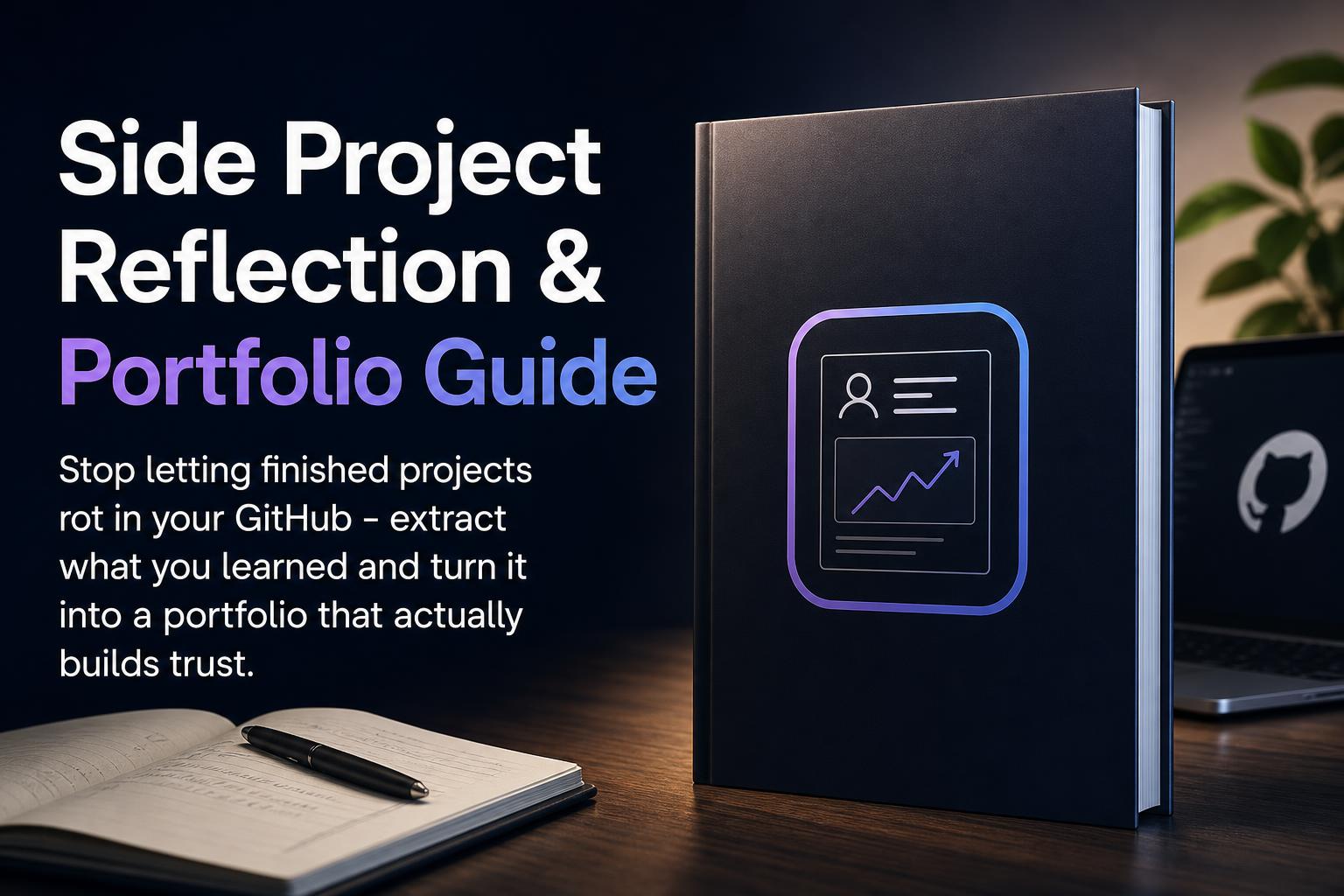
Side Project Reflection & Portfolio Guide
You have built real things and you have almost nothing to show for them.
Every project you finished - or abandoned - took months of your time and taught you something real, and right now it's sitting in a forgotten repo or a dead subdomain with no story attached to it.
This is not a guide about getting more traffic or building a prettier portfolio site.
This is a structured system for extracting what your projects actually taught you and writing about them in a way that makes clients, investors, and collaborators trust your judgment.
What You Get
The 7-Question Reflection Framework
A set of specific prompts designed to surface what actually happened on any project, not just the parts that look good. You'll be able to sit down with any finished project and write a honest account of it in a single afternoon - including the assumption that broke and the decision you're most proud of.
Three Portfolio Templates (Short Card, Full Page, Conversation Starter)
Ready-to-fill structures for every context where you need to explain a project: your website, a client call, and a community post. Each one is built around judgment and story rather than metrics, so you can use them even when the numbers weren't impressive.
The 6-Part Case Study Framework
A clear structure that takes you from "I don't know where to start" to a finished case study in one sitting. It handles setup, the original bet, build decisions, real outcomes, lessons, and current status - in an order that actually makes sense to read.
The Technical Decision Translation Formula
A four-step formula for explaining technical choices to clients and investors who aren't developers. You'll be able to turn "I used PostgreSQL instead of MongoDB" into a paragraph that demonstrates judgment, not just knowledge.
The Honest Failure Paragraph Template
A fill-in structure for writing about projects that didn't work, without oversharing or spinning failure into fake inspiration. Specific enough to be credible, structured enough to actually finish.
The Learning Portfolio Format
A format for documenting how your thinking has changed over time - beliefs you've updated, practices you've adopted, experiments and their outcomes. This is the piece that separates builders with real experience from builders who just have a list of links.
The 200-Word Community Post Template
A reusable structure for sharing project stories in online communities without sounding like you're bragging or pitching. Built to open conversations, not close them.
The Quarterly Project Audit Process
A 30-minute maintenance routine that keeps your documentation accurate and up to date. Run it once every 3 months and your portfolio stays current without a major overhaul.
The Anti-Cliches List
A reference list of every phrase that has stopped meaning anything in developer portfolios, with replacement instructions. Cut these and your writing immediately sounds more credible.
Why This Pays for Itself
- One freelance client conversation that goes better because you can explain your projects clearly is worth 50x the price of this guide
- You will stop losing the specific details of finished projects to memory decay - the 15-minute debrief captures them before they're gone
- You will never again stare at a blank page wondering how to write about something you built
Perfect For
- Freelancers and consultants who need to explain past work to new clients without sounding vague
- Indie hackers who want their project history to feel like a body of work, not a graveyard of abandoned ideas
- Developers looking for a better answer to "what have you built?" in job interviews or conversations
- Side hustlers who have shipped multiple projects and want to start treating their experience as an asset
What's Included
- Instant digital download
- PDF and Markdown formats
- Lifetime access - yours to keep
- Works with ChatGPT, Claude, Gemini, and any other AI model