
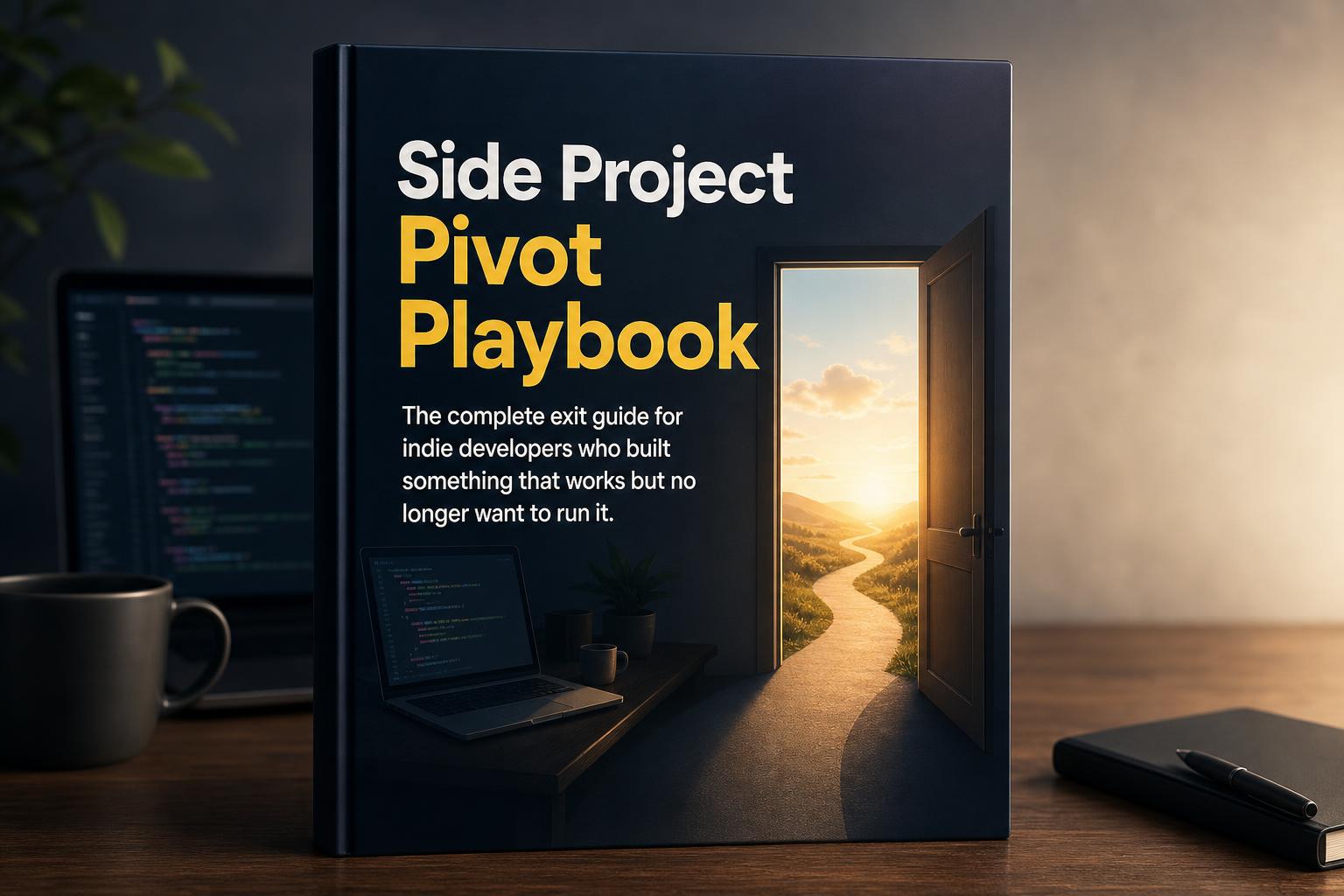
Side Project Pivot Playbook
You built a working side project and now you dread opening it.
Every support email feels like a tax. Every missed update adds guilt.
This is not a motivational guide to "rediscover your passion."
This is a complete system for deciding whether to pivot, sell, or shut down - and then executing that decision cleanly, professionally, and without six months of regret.
What You Get
A clear decision framework for pivot, sale, or shutdown
Three questions that tell you which exit path fits your specific situation. Not vague advice about "following your gut" - an actual decision map based on revenue, user dependency, and valuation thresholds. You'll know which path to take before you finish the section.
A realistic valuation guide
Most indie developers either drastically overprice or undervalue their projects when selling. This guide shows you the actual multiples (2-4x annual net profit), what increases and decreases your number, and what a realistic offer looks like for a project making $500, $1,000, or $2,000 per month.
A full sale process walkthrough
Where to list, how to write a listing that attracts real buyers, how to screen out time-wasters, how to structure a negotiation, and what a transition period should actually look like. Includes how to answer "why are you selling?" without sounding defensive.
A shutdown timeline and protocol
A day-by-day schedule for closing a project responsibly: when to announce, how long to give users, what your data export obligation is, and what to do with the domain afterward. Covers the legal minimum for GDPR and user data.
Ready-to-send email templates
Four complete templates: shutdown announcement to users, sale announcement to users, NDA request to potential buyers, and a response to lowball offers. Edit lightly, send the same day.
The pivot playbook
Before you exit, check whether a price increase, scope reduction, or delegation could change the experience of ownership. Includes the specific mechanics of raising prices, cutting support burden by 40%, and running a project in maintenance mode.
Legal and financial basics
What an Asset Purchase Agreement covers, how to handle user data in a transfer, what questions to ask your accountant about sale proceeds, and the one-page tax move (set aside 25-30% before spending anything) that most first-time sellers skip.
Post-exit guidance
What to do in the 30 days after you exit, including why starting a new project immediately is a mistake most builders make, how to handle sale proceeds, and how to update your public profile so a completed exit reads as a positive on your record.
Why This Pays for Itself
- A single price negotiation improvement on a $20,000 sale adds thousands - the valuation section alone can change your outcome by 20-30%
- You gain a repeatable exit process you can use on any future project, not just this one
- It eliminates the 3-6 months of stalling that most developers do before acting, which costs real money in lost opportunity and continued maintenance time
Perfect For
- Indie developers with a SaaS or tool that makes money but takes energy they no longer want to give
- Solopreneurs who are "ghost-maintaining" a project - keeping it alive but not improving it
- Developers who have received acquisition interest but don't know how to evaluate or respond to it
- Anyone who built something 2-5 years ago and has since moved on mentally but not officially
What's Included
- Instant digital download
- PDF and Markdown formats
- Lifetime access - yours to keep
- Works with ChatGPT, Claude, Gemini, and any other AI model